Use the 12-12-12 decluttering rule to clear unwanted items and discover smart storage ideas for every room. Create a more organized home today
Table of Contents
Decluttering does not have to mean emptying every closet, or reorganizing the entire house in a weekend. It can begin with a few practical decisions: what to let go of what to pass along, and what simply needs to be returned to its place. A simple rule gives those decisions a clear boundary, while thoughtful storage makes the results easier to maintain.
Reducing excess creates room for the items that support daily life. When frequently used belongings have accessible appropriate homes putting them away becomes part of the routine rather than another project. The goal is not a one-time transformation, but a home that is easier to use and reset over time.
What Is the 12-12-12 Rule for Decluttering?
The 12-12-12 rule is a straightforward way to make decluttering feel finite. Instead of deciding to “clean up” an entire room identify:
- 12 items to throw away
- 12 items to donate.
- 12 items to return to their proper places
Each category serves a different purpose. Discarding removes items that are no longer usable or needed while donating passes along usable belongings that no longer fit your life. Returning 12 items to their homes is also part of decluttering: it clears surfaces floors, and temporary piles so the space can function as intended.
The fixed number gives the task a clear endpoint. You do not need to solve every storage problem at once or make decisions about every possession. Focus on 36 deliberate choices, complete the three categories and stop or continue only if you are ready. That manageable scope can make it easier to begin and repeat the process in small areas over time.
How to Use the Rule Without Creating More Clutter
- Choose one contained area such as a drawer, shelf bedside table or entryway surface. A defined space keeps the task focused and prevents the project from spreading into the rest of the room.
- Set out two containers before you begin: one for items to discard and one designated container for donations. Put donation items directly into that container rather than creating a temporary pile that may remain in the room.
- As you identify the 12 items to return take each one to its intended storage location immediately. Avoid moving items from one surface to another or setting them aside for later.
- Once the area is reset remove the disposal items and place the donation container where it can be taken out when ready. Repeat the process in another small zone only when you have time to finish it.
The Best Place to Store Frequently Used Items
The best storage location for an item is usually close to where it is used and easy to access. Everyday essentials should not require opening multiple doors moving other belongings, or reaching into a difficult corner. When a home for an item is convenient returning it takes little effort and is more likely to become routine.
Inconvenient storage often has the opposite effect: items stay on counters floors, tables, and other visible surfaces because putting them away feels like an extra task. Reserve the most accessible shelves, drawers, and containers for belongings used regularly. Seasonal items, backups and occasional-use items can occupy higher shelves, lower cabinets or less central storage areas.
This simple distinction helps daily spaces stay clear while keeping less used possessions available when needed.
Make Storage Blend Into the Room
Storage can keep a room functional without making it feel overly utilitarian. Choose pieces that suit both the room’s style and the type of item they need to hold. Furniture with concealed capacity such as a storage bench or ottoman can contain larger or less attractive belongings while still serving a daily purpose
Closed cabinetry is similarly useful for items that create visual noise including supplies, media, and assorted household extras.
Keep open storage for items that benefit from quick access or contribute to the room’s appearance. Decorative baskets can hold blankets toys, or reading materials, while trays give smaller everyday items a defined place on a table, counter or dresser. Coordinated containers create a more deliberate look when several categories need to be stored together. Limit the mix of materials, colors and storage pieces so the room remains calm rather than crowded.
Best Shoe Storage for an Entryway
An entryway is a high traffic area so shoe storage should match daily use rather than accommodate an entire shoe collection. The aim is to contain the pairs currently in rotation while keeping the walkway clear and easy to navigate. Closed shoe cabinets reduce visual clutter and can create a more polished appearance especially in a small or frequently used entrance.
Low benches with built-in storage offer a practical place to sit while putting shoes on or taking them off. For quick-access containment use a basket or tray near the door to define where daily shoes belong and to keep them from spreading across the floor
Limited open shelving can also work but set a realistic limit on the number of pairs it holds. Store occasional, seasonal, and extra footwear elsewhere so the entry remains functional.
Bedroom Organization Ideas That Support Daily Routines
Bedroom organization works best when it follows the way the room is used each day. Give clothing a clear home in drawers closet zones or a designated chair only if it has a realistic limit. Keep frequently worn items accessible while off-season pieces can take less convenient space.
Assign bedside essentials to a drawer, tray, or small container so books glasses, chargers, and personal items do not gradually cover the nightstand. Place a laundry basket where clothes are most often removed making it easier to put worn items away immediately. Accessories also benefit from contained storage such as a divided drawer section, small box, or hooks for regularly used pieces.
Finally: keep furniture surfaces intentionally simple. A tray can define a limited area for daily items, while everything else should have a nearby home The easier a system is to use at the end of the day, the more likely the bedroom is to stay orderly.
Master Bedroom Organization: Create a Calmer Shared Space
In a shared primary bedroom clear boundaries can make storage easier to use and maintain. Divide personal storage by person and category such as assigning separate dresser drawers, closet sections or bedside storage. This allows each person to manage everyday belongings in a way that fits their routine.
Define shared areas separately for items such as laundry, linens and bedside surfaces. A shared hamper may work well in one household while separate baskets may better suit another. Keep nightstands and dressers limited to a few daily essentials to reduce visual clutter.
Use under-bed and closet space intentionally rather than as overflow storage. These areas can hold seasonal clothing extra linens or less-frequently used items in labeled containers or designated zones. In compact rooms, prioritize storage that serves more than one purpose; in larger bedrooms use the additional space to create clear, accessible categories instead of expanding clutter.
DIY Bedroom Organization Ideas
Simple DIY organization can give everyday items clearer homes without turning the bedroom into a major project. Repurposed boxes or baskets can contain small categories such as accessories, chargers or folded clothing. Drawer dividers create boundaries for items that otherwise shift together while labeled containers make it easier to identify seasonal items or extra supplies.
- Use wall mounted hooks for bags robes, or frequently worn accessories.
- Assign baskets to a specific purpose such as laundry reading materials, or extra linens.
- Create basic closet, or shelf zones for different clothing categories.
Labels and boundaries work best when each category is clear and the container has a realistic capacity. Choose solutions that are simple enough to use every day if putting something away requires too many steps it is less likely to stay organized.
Living Room Blanket Storage That Stays Convenient
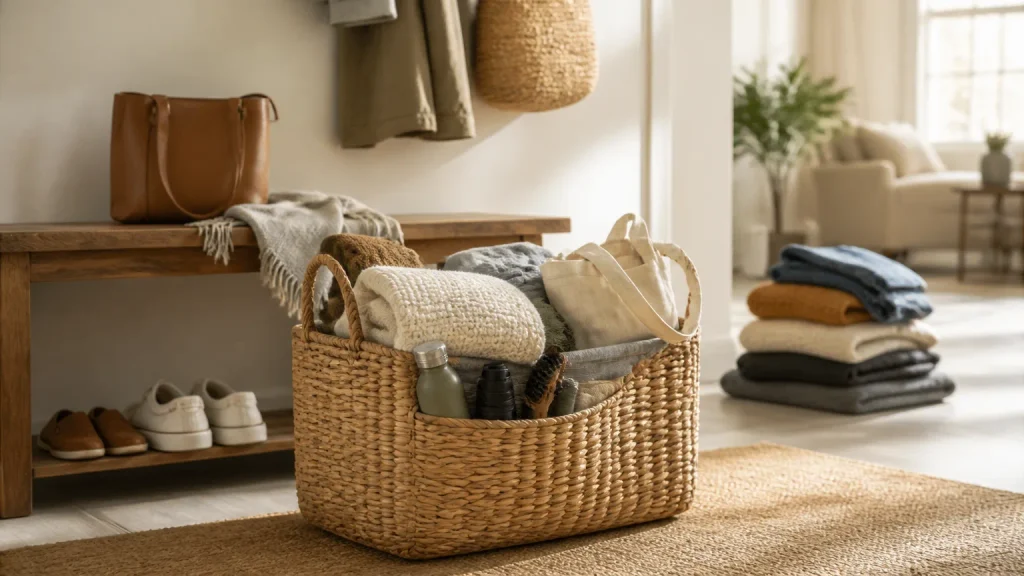
Keep blankets close to seating so they are easy to reach when needed but give them a defined home rather than allowing them to collect across sofas and chairs. Open options, such as decorative baskets or a bench with accessible storage work well for blankets used often and can add texture to the room. Choose a basket size that holds the usual number of throws without overflowing.
For a more concealed appearance, consider a lidded ottoman storage bench, or cabinet. These options can hold a larger volume of blankets while keeping the room visually calm. Select the solution based on how many blankets you keep nearby how quickly you want to access them, and whether you prefer storage to blend into the room or remain visible.
Jewelry Storage Ideas for Visibility and Protection
Jewelry storage should make commonly worn pieces easy to see while keeping small items separated and contained. Drawer organizers and divided trays are useful for sorting rings earrings and other small pieces into clear categories.
Small boxes can hold less frequently worn items or keep a collection out of sight when a calmer surface is preferred. For necklaces and other hanging pieces hooks provide individual spaces that help prevent tangling and make selection quicker. Enclosed organizers offer another option for containing a larger collection without leaving it exposed on a dresser or counter.
Reserve the most accessible drawer sections trays or hooks for jewelry worn often, and place occasional pieces in less prominent storage.
Use Simple Limits to Keep Organization Working
The 12-12-12 rule supports lasting organization because it turns clutter reduction into repeatable practical decisions. Keep only what comfortably fits within the space available, and give each item a home near where it is used.
Storage works best when it is easy to access and simple to reset not when it requires a large cleanup effort Reassess small areas regularly, rather than waiting for clutter to build throughout the home. One drawer, shelf, or surface at a time can keep the system manageable.